The promise of the Third Article of Faith
What is the Atonement of Christ?
The Third Article of Faith references the “Atonement of Christ.” What is that Atonement? Why was it needed?
When Jesus Christ walked the Earth, He had a mission to fulfill. That mission was His Atonement. The Atonement is, simplistically speaking, made up of two parts. The first part is the victory over death; the second part is the victory over sin.
In the Second Article of Faith, we read that we are not responsible for Adam and Eve’s transgression. Their decision in the Garden of Eden to partake of the fruit brought about the two conditions that Christ’s Atonement resolves: death and sin.
The first part of the Atonement Jesus performed was when He voluntarily gave up His life on the cross, and three days later was resurrected. “But now is Christ risen from the dead, and become the firstfruits of them that slept” (1 Corinthians 15:20). His resurrection has made our resurrection universal. This means that all of us will be resurrected one day and have an immortal body. This is freely given to all who are born on this Earth.
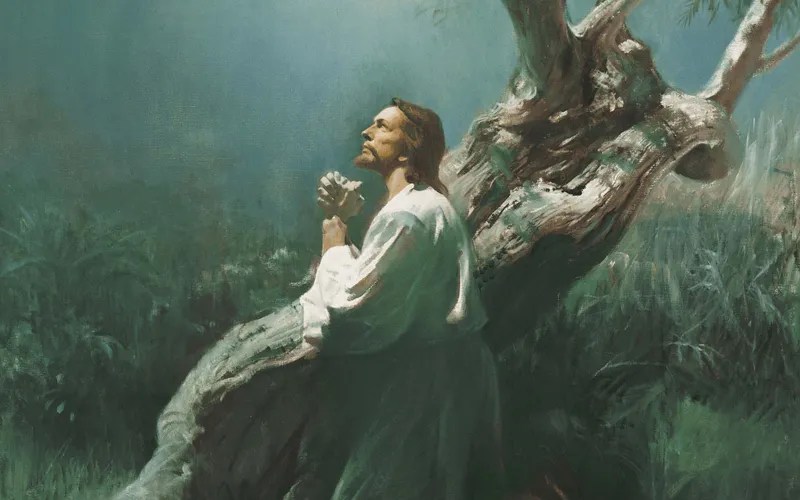
The second part of the Atonement is the victory over sin. Latter-day Saints believe this occurred in the Garden of Gethsemane and on the Cross. In these two spots, Christ took upon Himself the consequences for the sins we commit. He paid the price that “all mankind may be saved.” This payment is not freely given; we must do our part.
May be saved?
The phrase “all mankind may be saved” is significant. The second part of the Atonement isn’t a free pass. God has commanded us to live according to His rules. This means that we are not free to do whatever we want. We have guidelines that will keep us from having to pay the price for sin.
In modern times, the Lord has said, “For behold, I, God, have suffered these things for all, that they might not suffer if they would repent; But if they would not repent they must suffer even as I; Which suffering caused myself, even God, the greatest of all, to tremble because of pain, and to bleed at every pore, and to suffer both body and spirit—and would that I might not drink the bitter cup, and shrink— Nevertheless, glory be to the Father, and I partook and finished my preparations unto the children of men” (Doctrine and Covenants 19:16-19, emphasis added).
How do we avoid the consequences of sin?
The last phrase of the Article of Faith states, “by obedience to the laws and ordinances of the Gospel.” We will explore more in the Fourth Article of Faith. For now, the key to being saved involves obedience and repentance.
“Thou shalt offer a sacrifice unto the Lord thy God in righteousness, even that of a broken heart and a contrite spirit” (Doctrine and Covenants 59:8). The broken heart and contrite spirit spoken of mean we recognize our errors, feel sorrow for them, and ask God to forgive us. God will forgive us, and because of Christ’s Atonement, the debt of our sin has been paid.
Note the part about God forgiving us and earlier when I said we aren’t free to do whatever we want. To stay clean and to avail ourselves of the Atonement, we are asked to be obedient to the laws and ordinances of the Gospel. We have the responsibility to do as God has asked, receive the ordinances He requires, and live a life that glorifies God. It does not mean that we have to be perfect. God rewards our efforts and understands that we will fall. However, we must do our best to be obedient; otherwise, our repentance isn’t sincere, and we cannot be forgiven.
Why do I believe?
I believe that God loves all His children. That includes me. He wants what’s best for us. He also knows how we can be our best, achieve eternal life, and live in happiness. He also knows that this mortal life is a time when we learn these things. We will make mistakes. These mistakes have a high cost. A cost we cannot pay in this life.
His love for us led Him to create a plan of happiness. That plan requires a Savior. The Savior has the power to atone for our sins; to pay the cost. Faith in Jesus Christ then leads me to believe that through His Atonement I can be saved.
The resurrection of our bodies from mortal to immortal is freely given to us. The forgiveness of our sins is not. We must acquire a “broken heart and a contrite spirit,” obey the laws and ordinances God has required, and repent when we make mistakes.
True salvation comes through Christ’s Atonement and our willingness to follow God.
Conclusion
The Atonement of Jesus Christ encompasses two things:
- Resurrection from a mortal body to an immortal one – this is a free gift given to all born on this Earth
- Payment for sins – this is a conditional gift. As the Article of Faith states, we receive this gift through being obedient to the laws and ordinances of the Gospel. Repentance, by having a broken heart and a contrite spirit, along with the effort to live God’s laws, avails us of Christ’s payment for our sins
The Atonement allows “all mankind to be saved.”


Leave a comment