Elder Gary E. Stevenson advises us in “The Greatest Easter Story Ever Told” to enhance our worship of the Savior on Easter Sunday. As I read through his remarks it hit me that we can make every Sunday an Easter Sunday as we partake of the Sacrament.
What Is the Sacrament?
During the Last Supper, Christ introduced the Sacrament:
And as they were eating, Jesus took bread, and blessed it, and brake it, and gave it to the disciples, and said, Take, eat; this is my body. And he took the cup, and gave thanks, and gave it to them, saying, Drink ye all of it; For this is my blood of the new testament, which is shed for many for the remission of sins.
Matthew 26:26-28
The Sacrament is a remembrance of the Atonement that Jesus made during what we now call Easter. It is a way for us to think on His sacrifice, both body and blood, for our sins. The Sacrament allows us to reflect on our lives, to seek forgiveness, thank God for His love, and to commit to being better.
The Bread
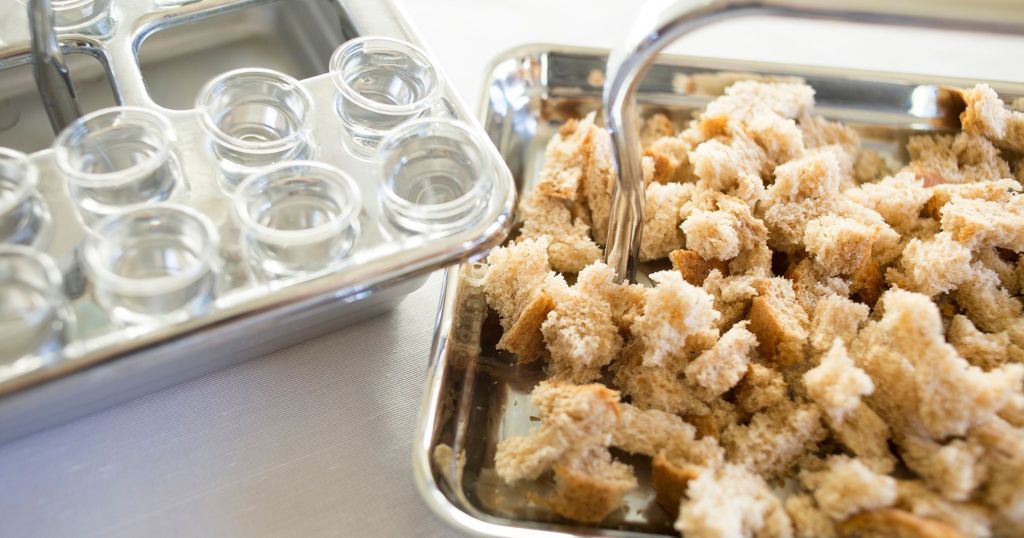
The bread is symbolic of the body of Christ. During the Sacrament, the bread is broken, blessed, and then distributed to us. The breaking of the bread is symbolic of Christ’s body being “broken” for us when he endured the painful death on the cross.
The blessing on the bread is as follows:
O God, the Eternal Father, we ask thee in the name of thy Son, Jesus Christ, to bless and sanctify this bread to the souls of all those who partake of it, that they may eat in remembrance of the body of thy Son, and witness unto thee, O God, the Eternal Father, that they are willing to take upon them the name of thy Son, and always remember him and keep his commandments which he has given them; that they may always have his Spirit to be with them. Amen.
Blessing on the Bread
Breaking down the blessing we see the following components:
- Asking God to bless and sanctify the bread for those who will eat it
- Participants are asked to eat the bread remembering the body of Christ
- Participants are asked to witness to God that they will take Christ’s name upon them and:
- Always remember Christ
- Keep the commandments Christ has given
- Asking God to bless the participants to always have His Spirit be with them
The bread is then distributed to the congregation who can choose to accept the blessing by eating the bread.
As one eats the bread, one should think on the bodily sacrifice Christ made for us. But also, one should think on the glorious resurrection of Christ that has broken the bonds of death.
“He is not here: for he is risen” (Matthew 28:6) proclaimed the angel at the tomb. Partaking of the bread should turn our thoughts towards the day we will also be resurrected. This is a free gift from God through Jesus Christ. This knowledge that we will rise from the grave along with our loved ones should make us grateful to God.
The Water
The water is symbolic of the blood Christ shed for our sins. “And being in agony he prayed more earnestly: and his sweat was as it were great drops of blood falling to the ground” (Luke 22:44). Before the sacrament meeting begins, water is poured into small cups and placed on the sacrament table. It is then blessed and distributed to the congregation after the bread.
The blessing on the water is as follows:
O God, the Eternal Father, we ask thee in the name of thy Son, Jesus Christ, to bless and sanctify this water to the souls of all those who drink of it, that they may do it in remembrance of the blood of thy Son, which was shed for them; that they may witness unto thee, O God, the Eternal Father, that they do always remember him, that they may have his Spirit to be with them. Amen.
Blessing on the Water
Similar to the blessing on the bread, this blessing has the following components:
- Asking God to bless and sanctify the water for those that will drink it
- Participants are asked to remember the blood of Christ, “which was shed for them”, as they drink.
- Participants are asked to witness that they will always remember Christ
- Asking God to bless those who have drank the water with His Spirit
The water is then distributed to the congregation. For those who drink of the water, it is a time to reflect on the Atonement made by Christ for their sins. It is a time to ask for forgiveness and to commit to being better. A time to thank God that His Son drank from the bitter cup in order to pay the price for our imperfectness.
Easter Sunday
On Easter Sunday we also celebrate the Atonement of Jesus Christ by remembering his suffering in Gethsemane and death on the cross. Along with that we also, in the United States, have the Easter basket tradition. This is where we receive sweets, usually chocolate, and some kind of gift. In our family, the gift has traditionally been a new swimsuit to get ready for summer.
The receiving of chocolate can be analogous to receiving the Sacrament. The sweetness of the chocolate similar to the sweetness of our sins being forgiven. If the chocolate is bitter, then a reminder of the bitterness of sin that Christ overcame.
A new garment can remind us of the new body we will receive in the resurrection. “The soul shall be restored to the body, and the body to the soul; yea, and every limb and joint shall be restored to its body; yea, even a hair of the head shall not be lost; but all things shall be restored to their proper and perfect frame” (Alma 40:23).
Making Every Sunday Easter Sunday
As we partake of the Sacrament every Sunday, we can make it an Easter Sunday. We won’t be doing baskets with sweets and a garment, but we can place the Atonement at the height of our worship. We can recall the words describing Christ’s suffering in Gethsemane and His death on the cross. We can picture the empty tomb and remember His resurrection.
As we remember the Atonement, we can show gratitude to our Heavenly Father for this supreme gift. We should also rededicate ourselves to “always [remembering] him”. Our hearts should be lifted up in Christ with the knowledge that physical and spiritual death cannot have a hold on us.
My Sacrament Ritual
I have a “ritual” I follow during the administration of the Sacrament. I will bow my head and close my eyes, review the previous week, look forward to the upcoming week, and ask that I might be forgiven and strengthened. As the blessings on the bread and water are said, I will repeat them in my mind to better remember the promises I’m making. Finally, I will seek the comfort of the Holy Ghost to let me know that I’m on the covenant path and receive a reassurance that God and Christ know and love me.
The Rest of the Day
After church, I try to make the rest of the day a spiritual feast. I don’t spend every waking minute in gospel study, prayer, or service, but I do make that the grand majority. I find that treating Sunday as a special day helps me to celebrate the Atonement and be grateful for the gifts God has given me.
Conclusion
Making every Sunday Easter Sunday by remembering the Atonement while taking Sacrament brings a strong Spirit into our lives. Understanding the emblems, promises, and blessings given allows for a better understanding of Christ’s suffering. The Sacrament can become a celebration of the Atonement along with the reflection on and recommitment to living Christ’s commandments.


Leave a Reply