Recently, I had the opportunity to visit London and Paris. There, we visited a few churches, and in two of them, we had the privilege of witnessing worship services and rituals. I have reflected on these opportunities and how they compare to the worship services and rituals in The Church of Jesus Christ of Latter-day Saints.
St. Chapelle – Paris
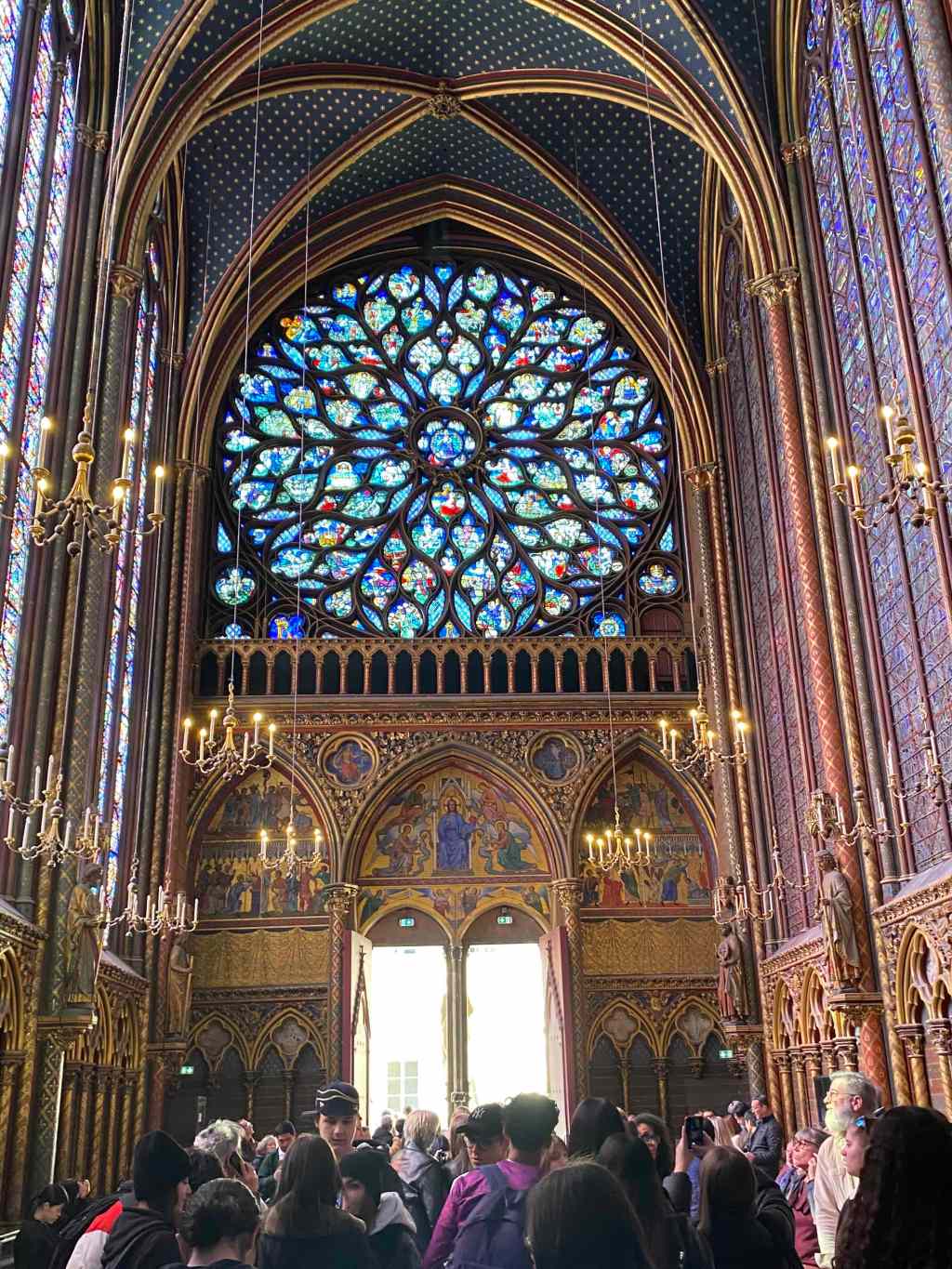
The featured image for this post is “The Rose of the Apocalypse” in the St. Chapelle church in Paris. One of the things that I find inspiring in these churches is the stained glass windows. St. Chapelle’s upper room contains wall-to-wall stained glass. There are squares of glass that depict bible stories. Even though we didn’t attend a service there, the stories in the stained glass helped us remember God’s love.
St. Paul’s Cathedral – London
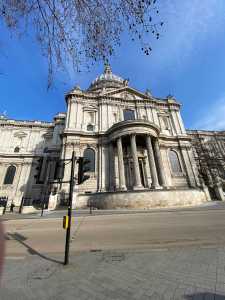
In London, we attended Choral Mattins in St. Paul’s Cathedral. This service was a mixture of song, “call and answer”, reading, and sermon. We participated when the program indicated, minus some things we don’t believe. During the service, I felt the Holy Ghost present when my beliefs aligned with the service. I wasn’t amazed by this, as we believe that God will witness truth to anyone who seeks it.
In the service, the Lord’s Prayer was said, a reading from the Old Testament, a reading from the New Testament, several songs sung by the choir, and a blessing issued by the Priest (hopefully that’s the right designation) leading the service. It was fascinating to watch the reverence of those who participated. You felt the participants’ belief.
Notre Dame – Paris

In Paris, we took some time to visit Notre Dame. It is a massive cathedral and is filled with pictographs, statues, stained glass, and other items. I asked my daughter why she thought they built such a large building. She, as is usual for a teenager, said: “I don’t know.” I told her I thought there were two reasons. First, to show the magnificence and grandeur of God. Second, to help anyone who entered the cathedral to feel closer to God.
The basic tour of Notre Dame leads you in a circle around the main area where services are held. On one side of this are small depictions of the life of Christ. The one that stood out to me was a depiction of Herod’s order to kill every child two years old and younger. I don’t think I’ve seen that anywhere else.
While we were there, a priest was performing a service. I have to admit I was very impressed with the priest. It was the same service repeated several times, but in different languages. The languages varied, from Romance to Germanic to Slavic. I only picked up on it because of the repetition of “Hail Mary.” The priest wasn’t just reciting the service; you could feel his emotion and belief.
Latter-day Saint Sunday Service
The services I witnessed in St. Paul’s and Notre Dame got me thinking about Latter-day Saint services. I saw rituals in those other churches and reflected on what we do on Sundays. While I didn’t get to be in a service where Communion was administered, I was reminded of the Sacrament we participate in every week.
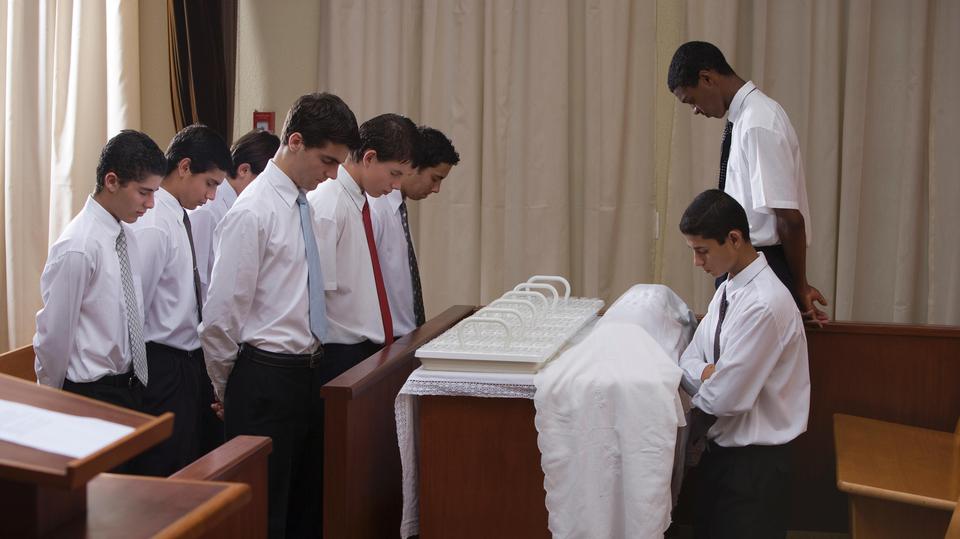
On Sunday, the first hour of our worship is dedicated to remembering Jesus Christ and renewing our baptismal covenants. The focal point of that hour is the administering and partaking of the Sacrament. This follows a set “ritual”, if you will. First, as a congregation, we sing a sacramental hymn. This hymn accomplishes two things: first, it allows each member the chance to prepare to take the sacrament, and second, the priests at the sacrament table break bread into bite-sized pieces.
After the hymn, one priest kneels and prays the sacramental bread prayer. That prayer is:
O God, the Eternal Father, we ask thee, in the name of thy son, Jesus Christ, to bless and sanctify this bread to the souls of all those who partake of it, that they may eat in remembrance of the body of thy Son, and witness unto thee, O God, the Eternal Father, that they are willing to take upon them the name of thy Son, and always remember him and keep his commandments which he has given them; that they may always have his Spirit to be with them. Amen.
Upon finishing the prayer, deacons and teachers move to the sacramental table and receive bread trays. They then distribute the bread to the congregation, ensuring everyone has an opportunity to partake. Once finished, the deacons and teachers return to the table, and the priests return the trays to it.
Another priest then kneels and prays the sacramental water prayer. That prayer is:
O God, the Eternal Father, we ask thee in the name of thy Son, Jesus Christ, to bless and sanctify this water to the souls of all those who drink of it, that they may do it in remembrance of the blood of thy Son, which was shed for them; that they may witness unto thee, O God, the Eternal Father, that they do always remember him, that they may have his Spirit to be with them. Amen.
After this prayer, the teachers and deacons receive the water trays and distribute the water in like manner to the bread. Once finished, they again return to the table where the priests receive the trays. The bread and water trays are covered in a cloth, and the priests, teachers, and deacons return to their seats in the congregation.
One note to make. Before the service begins, the sacrament is prepared by teachers and priests. This means that the bread trays are laid out with bread, and the water trays are filled. These are covered with a cloth until it’s time for administration.
After this “ordinance of the sacrament”, the meeting continues. Typically, the meeting proceeds to what other churches would describe as sermons. We call them talks. These are normally given by members of the congregation through invitation. The invitations are extended beforehand, allowing the member time to prepare. The member is also assigned a topic. As stated above, the focal point of the meeting is Jesus Christ, and the topic always focuses on Him.
Conclusion
Every religion has its worship services and rituals. Each one is unique to the religion. Each one aims to bring the participant closer to God. I am grateful to have witnessed/participated in services from other religions. This helps me understand better how their members develop devotion and faith. It also provides me the opportunity to reflect on Latter-day Saint services and how those can deepen my faith in the gospel of Jesus Christ.
 Whether By Mine Own Voice
Leave a comment