“Blessed are the peacemakers: for they shall be called the children of God” (Matthew 5:9, emphasis added).
On a recent business trip, as I was going to the airport to fly home, my Uber driver and I were in a conversation. It started with the normal, “How’s your day going?”, “What brings you to town?”, you know, small talk. We started talking about the current state of things, especially with the current government shutdown. My driver then asked me, “What’s your take on peace?” I explained that we’ve gotten into a society where the person who shouts the loudest wins instead of listening to one another and discussing our differences.
His next question was a little surprising: “Are you Mormon?” I don’t know how he gleaned that insight; nevertheless, I answered yes. I know, I’m supposed to correct it and state that I’m a member of the Church of Jesus Christ of Latter-day Saints. However, it didn’t feel right and would have thrown the conversation off. My driver is Muslim and stated that there are similarities in our teachings, especially concerning families.
I explained to him that I believe peace starts with ourselves and in our homes. It then spreads to our neighbors, communities, counties, states, country, and then the world. I truly believe that peace can snowball if we do our part in our little area. He agreed with me that peace is something that needs to be in our homes first.
I further explained that we have two conferences a year (General Conference), where our global leaders give messages of love and inspiration. Recently, there have been several messages about being peacemakers and that it’s important to our leaders that we, as members of the church, do all we can to become peacemakers.
We spent the rest of the ride in conversation about other religious and non-religious beliefs we have in common, but his question, “What’s your take on peace?” stuck with me.
In the October 2025 General Conference, Elder Gary E. Stevenson delivered the message “Blessed Are the Peacemakers.” He tells a fictional story of a teenager from Galilee who hears Jesus’s “Sermon on the Mount.” The boy returns to his family after hearing the sermon and is asked to tell what he heard and learned. After telling his family what Jesus said, the boy asks, “Can I truly become a peacemaker when the world is in commotion, when my heart is filled with fear, and when peace seems so far away?”
His parents in the story respond, “Yes. We begin in the most basic place—in our hearts. Then in our homes and families. As we practice there, peacemaking can spread to our streets and villages.”
Commotion Today
I think we all can agree that today’s world is full of commotion. We see it in the news, on our timelines, at our jobs, and in our communities. Currently, our political climate isn’t one of leaders working together to find solutions that better our lives, but rather one where “we’re right, they’re wrong” is the prevailing sentiment.
For instance, when was the last time we had a true debate in this country? The definition of debate is “a formal discussion on a particular topic in a public meeting or legislative assembly, in which opposing arguments are put forward.” In a peaceful debate, there would be no name-calling, no scoreboard of “zingers landed”, and no blatant interruptions.
Peacemaking Starts with Me
As mentioned before, the beginning of peace starts with oneself. What does that really mean? I believe it’s a mindset. One where we have “virtue garnish [our] thoughts unceasingly” (Doctrine and Covenants 121:45). When we have virtuous thoughts, it’s hard to be contentious. We must have peace in our minds. To me, not having worries or anxiety about everything keeps me in a peaceful state. Thinking good of others, looking to Christ in our every thought (Doctrine and Covenants 6:36), and keeping a prayer in my heart brings peace to my mind.
Peacemaking at Home
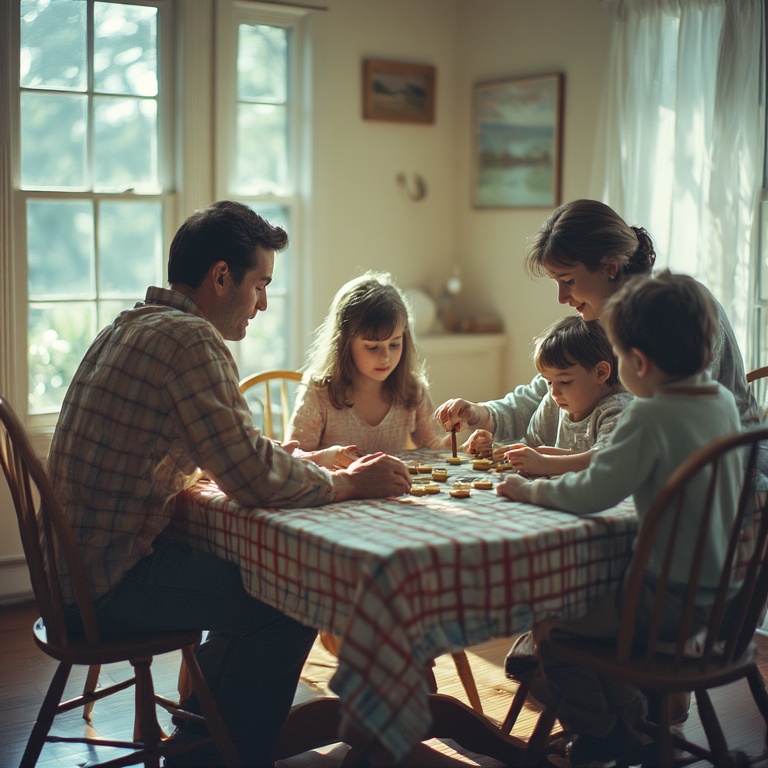
Once we have peace in our hearts and minds, the next logical place is to seek peace in our home. One would think that this would be an easy thing to accomplish. Family is the heart of our lives, the place where we feel safest and loved. However, parents and children don’t always get along, siblings bicker and fight, voices get raised, and feelings get hurt. It’s natural.
Just like we have to work to have peace in our hearts and minds, we need to work to have peace in our homes. We have five children, ages 18 to 24. We have struggled at times to have peace in our home. I have struggled to be a peacemaker at times. However, there is one thing that I have tried to do in my family that seems to help. I constantly look for a situation/scenario where I can teach.
Recently, there have been several opportunities for me to teach peacemaking. For instance, one of my children recently had a conflict with a sibling due to a correction the sibling made in front of another person. I wasn’t there when the incident occurred. I got the story from both children separately. The first child explained his side of the story, and I listened to understand his frustration. He had mistakenly given a fact about our house that his sibling corrected. Even though his sibling was correct, he felt that his sibling had jumped in and derailed a good conversation. He was also embarrassed to have gotten things wrong, which also led to a confrontation. The first child explained how he “called out” his sibling later when they were alone.
For my part, I listened to the first child and then calmly explained that his sibling’s OCD probably kicked in when the incorrect fact was stated. I further explained that sometimes his sibling has to correct a wrong fact in order for his brain to feel balanced. The first child said he understood and later apologized for the calling out he delivered.
The second child came to me later in the day and related the same story and the calling out he received. I again listened and then explained to the second child that his sibling probably felt embarrassed for getting the fact wrong and that embarrassment in front of another person hurt his feelings. The second child said he understood how that could be and that he could have talked to his sibling later and made the correction in private.
It’s moments like those where I can be a peacemaker in my home as well as help my family understand what they can do to make our home more peaceful. It’s not a one-time thing. It takes patience, kindness, long-suffering, and a host of other attributes.
Peace Beyond Our Homes
Being a peacemaker and bringing peace beyond our homes works in a similar manner. We must be the example and help others when we can. Thinking about the conversation with my Uber driver, maybe there was something about my mannerisms that led him to believe I was a peaceful person.
With the world being in turmoil and commotion, the more of us who can be examples of peace and help others achieve peace will lead to better lives in the areas where we live. Elder Stevenson quotes Elder John A. Widtsoe, “The only way to build a peaceful community is to build men and women who are lovers and makers of peace. Each individual, by that doctrine of Christ … holds in his hands the peace of the [whole] world” (John A. Widtsoe, in Conference Report, Oct. 1943, 113).
We should applaud and join with those who seek peace. Elder Stevenson relates the story of Imam Muhammad Ashafa and Pastor James Wuye and how they put aside the contention between their groups and began to work together to establish “a center for interfaith meditation. They now teach others to replace hatred with hope.”
What if we did something similar? What if we could have interfaith coalitions that taught the second great commandment to love our neighbors as ourselves? How much better would the world be if we could replace hatred with hope?
Conclusion
“Peacemaking is a Christlike attribute. … Peacemaking requires courage and compromise but does not require sacrifice of principle. Peacemaking is to lead with an open heart, not a closed mind. It is to approach one another with extended hands, not clenched fists.” Being a peacemaker starts in our hearts and minds, it expands to our home, and then beyond. If we want a better world, we all need to become peacemakers.
 Whether By Mine Own Voice
Leave a comment